
About the project
EduMoney explores how people in the Middle Ages learnt to understand money, conduct business, and make a profit in a world of changing currencies and expanding trade.
Focusing primarily on Tuscany between 1202 and 1478, while tracing connections across Europe and the Mediterranean, the project examines practical arithmetic textbooks, known as abacus manuals, and merchants’ notebooks, or pratiche di mercatura. Their calculations, commercial information, and worked examples reveal how financial knowledge was taught and shared, thus how money itself became a tool for learning to compare values, calculate profits, and navigate the marketplace.
At the heart of the project is NOTA, a new database documenting more than 120 surviving merchants’ notebooks, many unpublished or little studied. By bringing together information about their contents, origins, and transmission, NOTA opens new paths to understanding how commercial knowledge was produced, circulated, and preserved. EduMoney also connects this history with financial literacy today through teaching and public engagement.
Led by Stefano Locatelli, EduMoney is funded by a three-year Marie Skłodowska-Curie Global Postdoctoral Fellowship under the European Union’s Horizon Europe programme (grant agreement no. 101106709). The project is based at the University of Milan, with Fordham University’s Center for Medieval Studies in New York hosting its outgoing research phase.
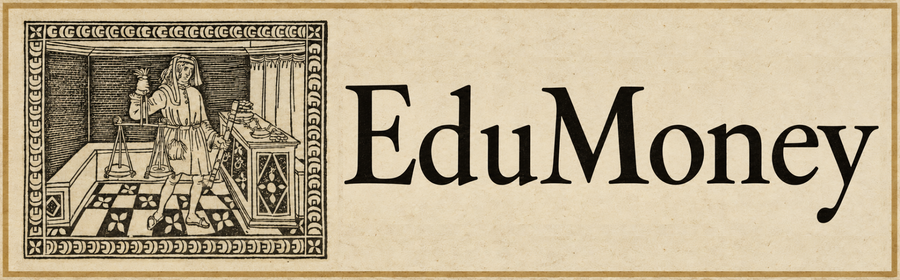
Featured image from Jacobus de Cessolis’s Libro di giuocho di scacchi (Florence, Antonio Miscomini, 1493): BNCF, P. 5. 4